Esquire Magazine
FRANK SINATRA HAS a COLD
Gay Tales for ESQUIRE MAGAZINE
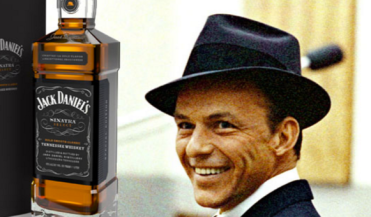
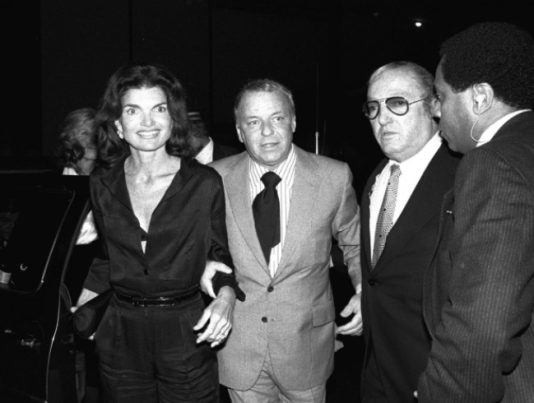
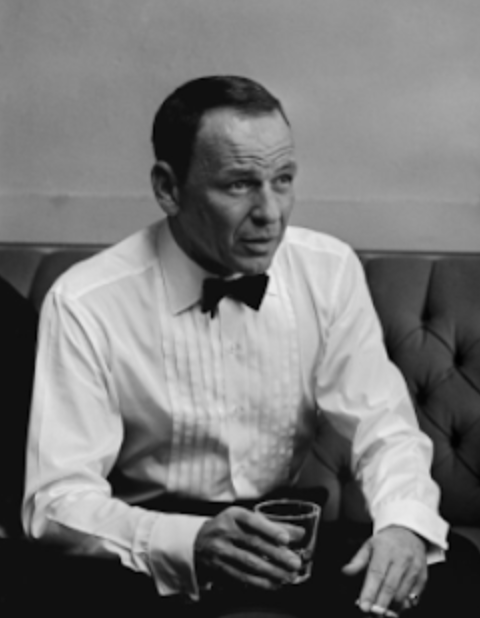
Frank Sinatra, holding a glass of bourbon in one hand and a cigarette in the other, stood in a dark corner of the bar between two attractive but fading blondes who sat waiting for him to say something. But he said nothing; he had been silent during much of the evening, except now in this private club in Beverly Hills he seemed even more distant, staring out through the smoke and semidarkness into a large room beyond the bar where dozens of young couples sat huddled around small tables or twisted in the center of the floor to the clamorous clang of folk-rock music blaring from the stereo. The two blondes knew, as did Sinatra’s four male friends who stood nearby, that it was a bad idea to force conversation upon him when he was in this mood of sullen silence, a mood that had hardly been uncommon during this first week of November, a month before his fiftieth birthday.
Sinatra had been working in a film that he now disliked, could not wait to finish; he was tired of all the publicity attached to his dating the twenty-year-old Mia Farrow, who was not in sight tonight; he was angry that a CBS television documentary of his life, to be shown in two weeks, was reportedly prying into his privacy, even speculating on his possible friendship with Mafia leaders; he was worried about his starring role in an hour-long NBC show entitled Sinatra—A Man and His Music, which would require that he sing eighteen songs with a voice that at this particular moment, just a few nights before the taping was to begin, was weak and sore and uncertain. Sinatra was ill. He was the victim of an ailment so common that most people would consider it trivial. But when it gets to Sinatra it can plunge him into a state of anguish, deep depression, panic, even rage. Frank Sinatra had a cold.
Sinatra with a cold is Picasso without paint, Ferrari without fuel—only worse. For the common cold robs Sinatra of that uninsurable jewel, his voice, cutting into the core of his confidence, and it affects not only his own psyche but also seems to cause a kind of psychosomatic nasal drip within dozens of people who work for him, drink with him, love him, depend on him for their own welfare and stability. A Sinatra with a cold can, in a small way, send vibrations through the entertainment industry and beyond as surely as a President of the United States, suddenly sick, can shake the national economy.
For Frank Sinatra was now involved with many things involving many people—his own film company, his record company, his private airline, his missile-parts firm, his real-estate holdings across the nation, his personal staff of seventy-five—which are only a portion of the power he is and has come to represent. He seemed now to be also the embodiment of the fully emancipated male, perhaps the only one in America, the man who can do anything he wants, anything, can do it because he has money, the energy, and no apparent guilt. In an age when the very young seem to be taking over, protesting and picketing and demanding change, Frank Sinatra survives as a national phenomenon, one of the few prewar products to withstand the test of time. He is the champ who made the big comeback, the man who had everything, lost it, then got it back, letting nothing stand in his way, doing what few men can do: he uprooted his life, left his family, broke with everything that was familiar, learning in the process that one way to hold a woman is not to hold her. Now he has the affection of Nancy and Ava and Mia, the fine female produce of three generations, and still has the adoration of his children, the freedom of a bachelor, he does not feel old, he makes old men feel young, makes them think that if Frank Sinatra can do it, it can be done; not that they could do it, but it is still nice for other men to know, at fifty, that it can be done.
But now, standing at this bar in Beverly Hills, Sinatra had a cold, and he continued to drink quietly and he seemed miles away in his private world, not even reacting when suddenly the stereo in the other room switched to a Sinatra song, “In the Wee Small Hours of the Morning.”
Sinatra with a cold is Picasso without paint, Ferrari without fuel—only worse.
It is a lovely ballad that he first recorded ten years ago, and it now inspired many young couples who had been sitting, tired of twisting, to get up and move slowly around the dance floor, holding one another very close. Sinatra’s intonation, precisely clipped, yet full and flowing, gave a deeper meaning to the simple lyrics—“In the wee small hours of the morning/while the whole wide world is fast asleep/you lie awake, and think about the girl….”—it was like so many of his classics, a song that evoked loneliness and sensuality, and when blended with the dim light and the alcohol and nicotine and late-night needs, it became a kind of airy aphrodisiac. Undoubtedly the words from this song, and others like it, had put millions in the mood, it was music to make love by, and doubtless much love had been made by it all over America at night in cars, while the batteries burned down, in cottages by the lake, on beaches during balmy summer evenings, in secluded parks and exclusive penthouses and furnished rooms, in cabin cruisers and cabs and cabanas—in all places where Sinatra’s songs could be heard were these words that warmed women, wooed and won them, snipped the final thread of inhibition and gratified the male egos of ungrateful lovers; two generations of men had been the beneficiaries of such ballads, for which they were eternally in his debt, for which they may eternally hate him. Nevertheless here he was, the man himself, in the early hours of the morning in Beverly Hills, out of range.
The two blondes, who seemed to be in their middle thirties, were preened and polished, their matured bodies softly molded within tight dark suits. They sat, legs crossed, perched on the high bar stools. They listened to the music. Then one of them pulled out a Kent and Sinatra quickly placed his gold lighter under it and she held his hand, looked at his fingers: they were nubby and raw, and the pinkies protruded, being so stiff from arthritis that he could barely bend them. He was, as usual, immaculately dressed. He wore an oxford-grey suit with a vest, a suit conservatively cut on the outside but trimmed with flamboyant silk within; his shoes, British, seemed to be shined even on the bottom of the soles. He also wore, as everybody seemed to know, a remarkably convincing black hairpiece, one of sixty that he owns, most of them under the care of an inconspicuous little grey-haired lady who, holding his hair in a tiny satchel, follows him around whenever he performs. She earns $400 a week. The most distinguishing thing about Sinatra’s face are his eyes, clear blue and alert, eyes that within seconds can go cold with anger, or glow with affection, or, as now, reflect a vague detachment that keeps his friends silent and distant.
Leo Durocher, one of Sinatra’s closest friends, was now shooting pool in the small room behind the bar. Standing near the door was Jim Mahoney, Sinatra’s press agent, a somewhat chunky young man with a square jaw and narrow eyes who would resemble a tough Irish plainclothesman if it were not for the expensive continental suits he wears and his exquisite shoes often adorned with polished buckles. Also nearby was a big, broad-shouldered two-hundred-pound actor named Brad Dexter who seemed always to be thrusting out his chest so that his gut would not show.
Brad Dexter has appeared in several films and television shows, displaying fine talent as a character actor, but in Beverly Hills he is equally known for the role he played in Hawaii two years ago when he swam a few hundred yards and risked his life to save Sinatra from drowning in a riptide. Since then Dexter has been one of Sinatra’s constant companions and has been made a producer in Sinatra’s film company. He occupies a plush office near Sinatra’s executive suite. He is endlessly searching for literary properties that might be converted into new starring roles for Sinatra. Whenever he is among strangers with Sinatra he worries because he knows that Sinatra brings out the best and worst in people—some men will become aggressive, some women will become seductive, others will stand around skeptically appraising him, the scene will be somehow intoxicated by his mere presence, and maybe Sinatra himself, if feeling as badly as he was tonight, might become intolerant or tense, and then: headlines. So Brad Dexter tries to anticipate danger and warn Sinatra in advance. He confesses to feeling very protective of Sinatra, admitting in a recent moment of self-revelation: “I’d kill for him.”
While this statement may seem outlandishly dramatic, particularly when taken out of context, it nonetheless expresses a fierce fidelity that is quite common within Sinatra’s special circle. It is a characteristic that Sinatra, without admission, seems to prefer: All the Way; All or Nothing at All. white”>she encouraged his singing.
Many Italo-American boys of his generation were then shooting for the same star—they were strong with song, weak with words, not a big novelist among them: no O’Hara, no Bellow, no Cheever, nor Shaw; yet they could communicate bel canto. This was more in their tradition, no need for a diploma; they could, with a song, someday see their names in lights…Perry Como…Frankie Laine…Tony Bennett…Vic Damone…but none could see it better than Frank Sinatra.
…. Gay Talese ….
READ MORE – CLICK HERE !
GAY TALESE
At Home in NEW YORK CITY
SINATRA SAUCE
“COMING SOON”
Daniel Bellino Zwicke
November 15, 2024
SUNDAY SAUCE
alla BELLINO alla PACINO